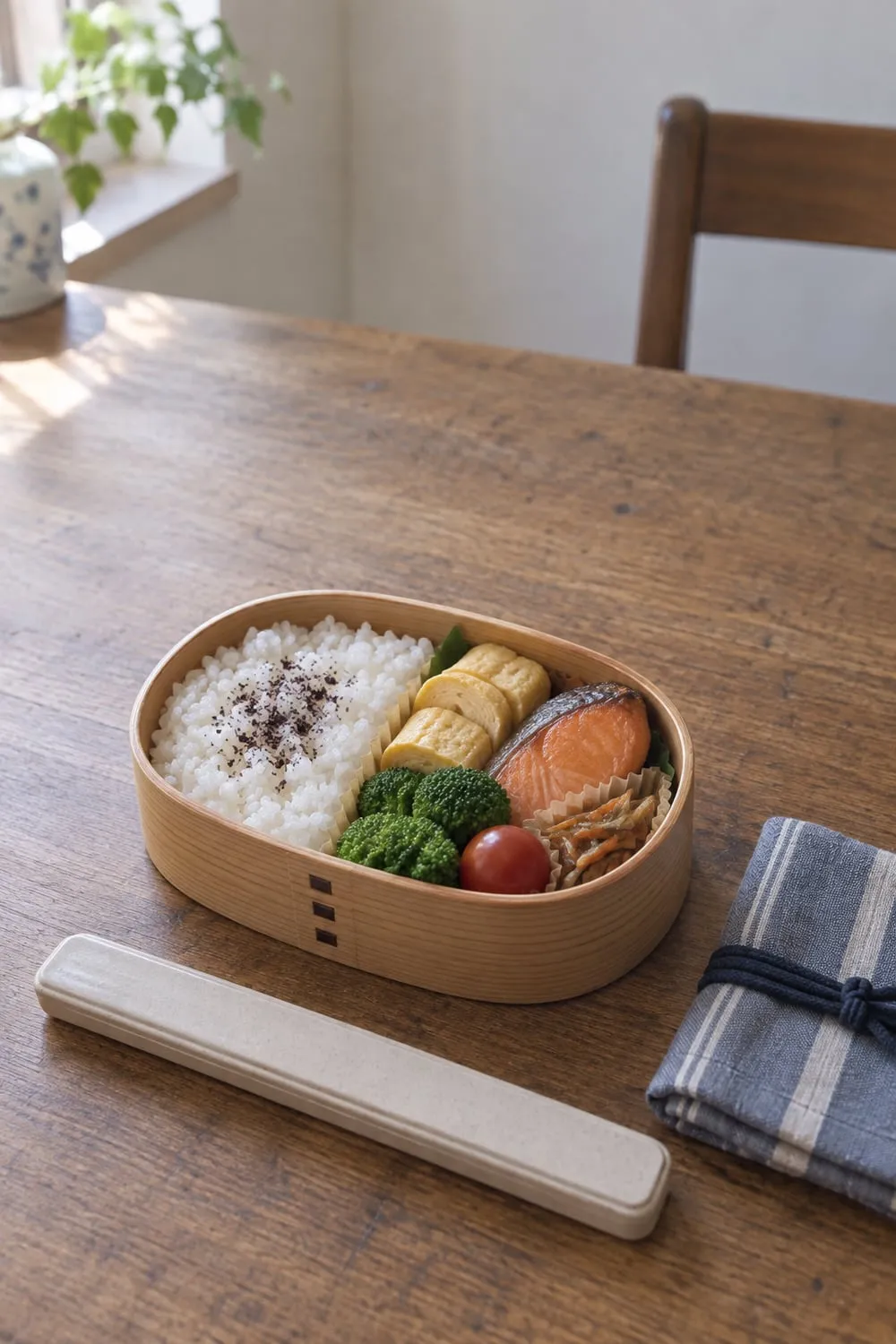
A bento is rice, several small dishes alongside it, packed in the morning and eaten cold at midday. That’s it. It isn’t a themed arrangement, it isn’t a week of identical meal-prep containers, and it usually takes about fifteen minutes.
I make one five or six days a week for my family’s lunch. What follows is what that actually looks like, including the part that gets left out of most English-language writing on the subject: the whole thing is built around food that sits at room temperature for five hours — which is a longer stretch than US food-safety guidance allows for, and which I come back to below rather than skip past.
First, about the ones you’ve seen photographed
Kyaraben — character bento, with rice shaped into cartoon faces and seaweed cut into eyes — is real. It’s also not what most people are doing on a Tuesday morning.
I’ve never made one. Children love them, and they take a great deal of time, and my guess is that relatively few people make them regularly. If your image of a Japanese lunch box comes from Pinterest, it’s worth knowing that you’re looking at the equivalent of an elaborately decorated birthday cake rather than what’s in the fridge.
The everyday version is much plainer, and much more useful to copy.
What goes in it
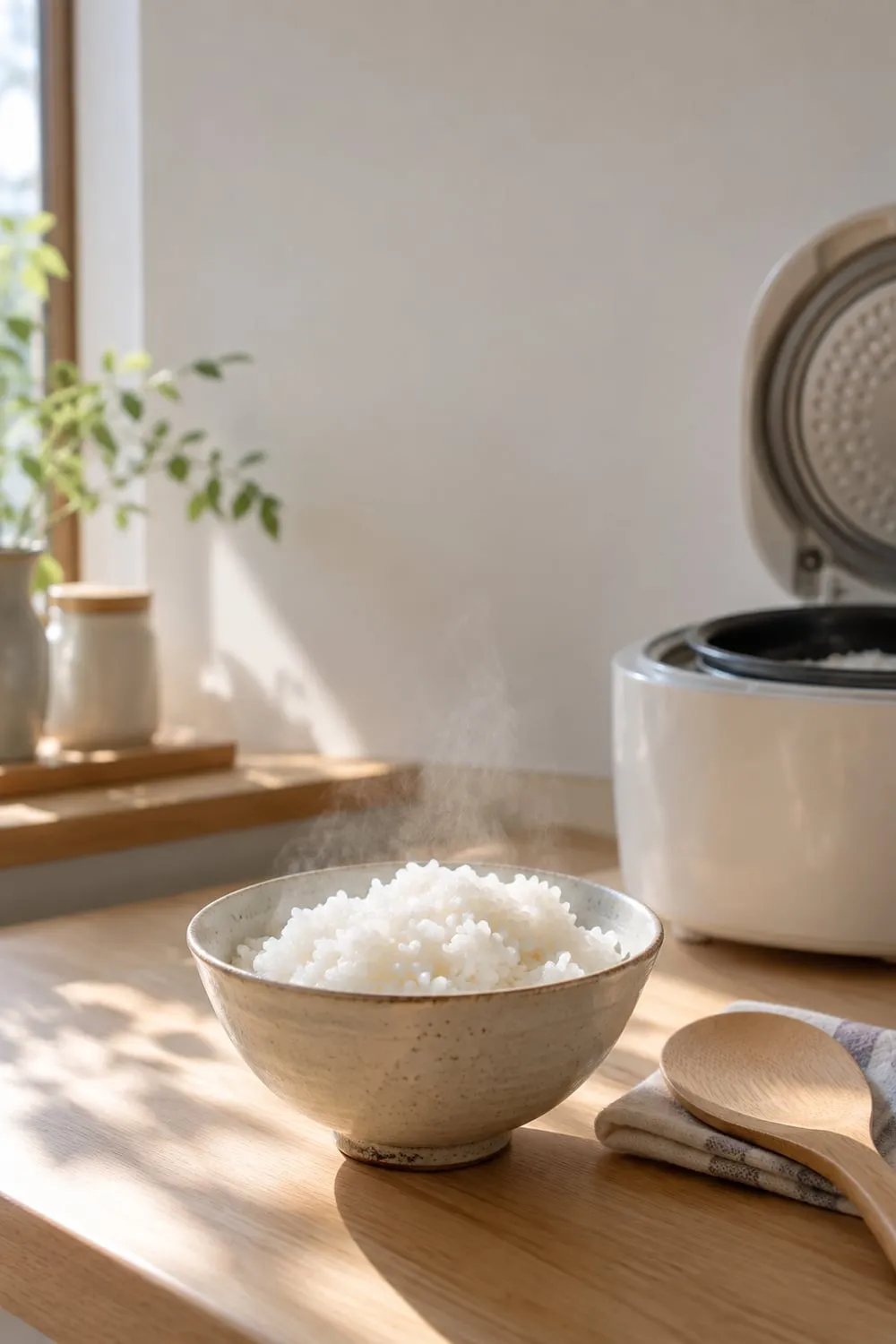
Rice, and about five small dishes.
Not five courses — five small things, most of them a couple of bites each. Something like a piece of grilled fish, a rolled omelette, a simmered vegetable, something pickled, a bit of blanched greens with sesame. The proportions matter more than the specific items: rice is the base, and everything else is a garnish around it in small quantities.
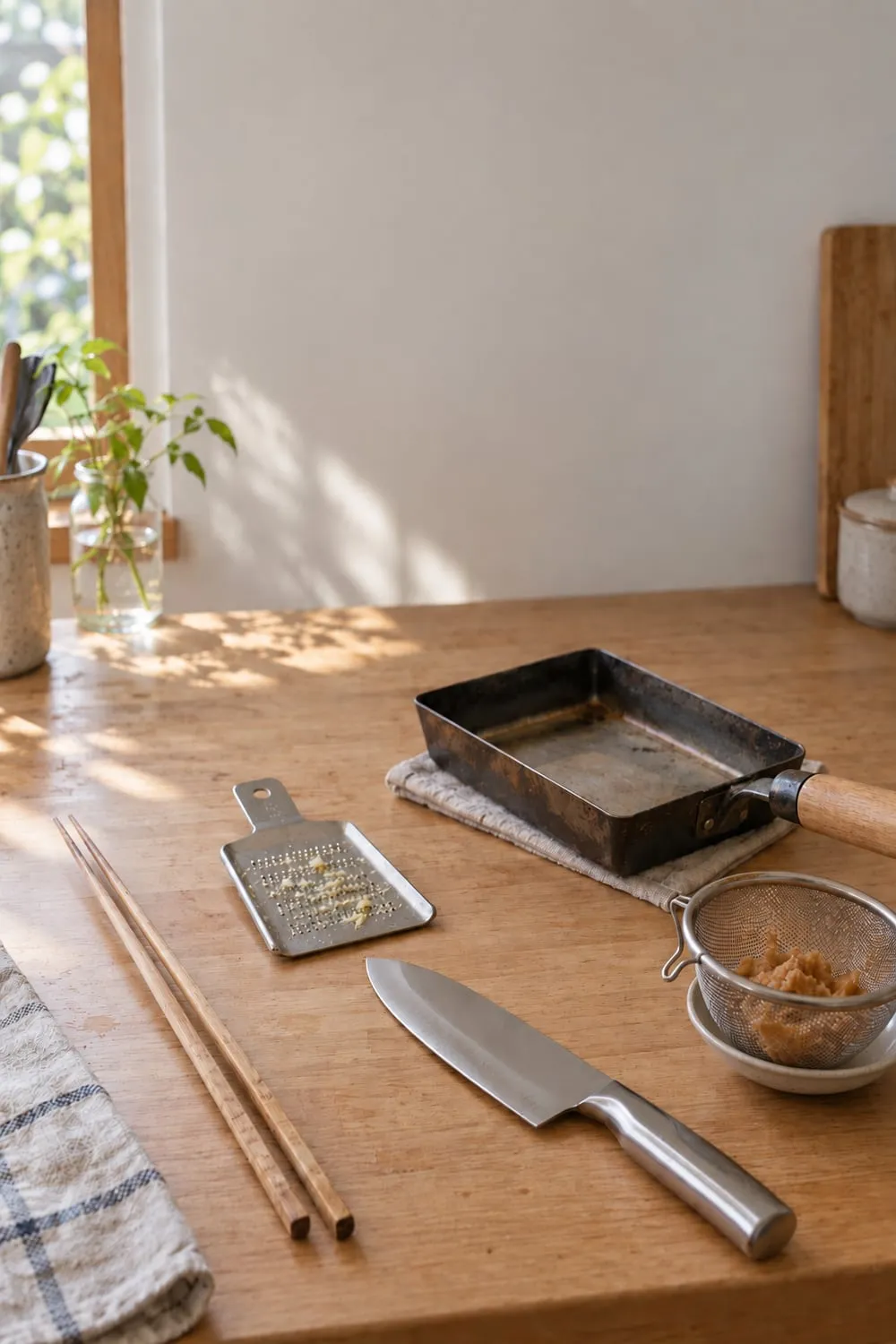
The one thing in my boxes every single day is tamagoyaki — the rolled omelette. It’s slightly sweet, it’s good cold, it fills a corner neatly, and it’s the single most useful thing to learn if you want to make bento regularly. A rectangular pan makes it much easier — you can make it in a round frying pan, but the square shape is what lets you roll it neatly out to the edges.
Tamagoyaki Pan
You can make a rolled omelette in a round frying pan, but the square shape is what lets you roll it neatly out to the edges. This one is iron and made in Japan, which means seasoning it and keeping it dry; non-stick versions are more forgiving if that sounds like work.
View on Amazon Opens Amazon.com in a new tab. Paid link.Leftovers from dinner are entirely normal and not considered a compromise. A great deal of bento cooking is simply making slightly more of something the night before.
How it’s packed
Our boxes have rice and dishes in separate containers, so there’s no order to speak of — one box gets rice, the other gets everything else.
If you’re using a single box, pack the rice first. It goes in as one flat mass and gives you a shape to work around; trying to fit rice into the gaps left by everything else is much harder.
Two-Tier Bento Box
Two stacking containers, so rice goes in one and everything else in the other. That separation is the point — it keeps sauces off the rice and lets the two cool at their own rate. Look for silicone-sealed lids and a strap.
View on Amazon Opens Amazon.com in a new tab. Paid link.Then the general principle: pack it tightly. Gaps let food slide around and arrive in a heap. Small silicone cups fill space, stop one dish leaking into another, and can be rearranged as the box empties.
Silicone Bento Cups
Small reusable cups that stop one dish leaking into another and fill the gaps that would otherwise let everything slide around. The cheap solution to the packing problem, and reusable, unlike the paper cases.
View on Amazon Opens Amazon.com in a new tab. Paid link.Everything should be cold before the lid goes on, which brings us to the part that actually matters.
About eating it at room temperature
Here I have to be careful, because the Japanese habit and standard American food-safety guidance do not line up, and it’s better to show you the gap than to paper over it.
In Japan, a lunch packed at seven and eaten at noon is completely ordinary and always has been. US guidance is stricter: the FDA advises refrigerating perishable food within two hours, or within one hour if it’s above 90°F (32°C), because 40–140°F is the range in which bacteria multiply fastest. Five hours on a desk is outside that window, and describing what my kitchen does doesn’t change it.
It also isn’t a settled question here. Summers have got hotter, there are days now when I think about it in a way I didn’t used to, and the precautions matter more than they did.
So I’m not going to tell you the Japanese practice is fine for you. What I can do is say what’s actually done here, and then how I’d close the gap.
What’s done here
Everything is cooled completely before the lid goes on. This is the one that matters most in a Japanese kitchen, and it’s largely about condensation — warm food in a sealed box steams, and the water that settles back onto the food is what gets things started. Nothing is packed hot, and the lid goes on last.
An ice pack, sitting on top of the box inside its bag.
An antibacterial sheet laid over the food. They’re sold in any supermarket here.
Umeboshi. A pickled plum in the rice is the traditional measure, and it’s what everyone’s grandmother did. Whatever effect it has is local to what it touches, so a plum sitting in the middle of a box of rice isn’t doing much for the corners — which is presumably the thinking behind the advice you hear now, which is to chop it and mix it through the rice instead. That’s what I do in summer. Either way, keep it because it tastes right rather than because it’s protecting the lunch.
I want to be plain about what these are. They’re long-standing habits, not controls. Cooling food and resting an ice pack on it slows how fast it warms up; it doesn’t hold the food at refrigerator temperature, and I can’t tell you it makes five hours safe.
How to close the gap
This part isn’t my advice, and you should follow it over anything in the section above. The USDA publishes guidance specifically for packed lunches, and it’s short:
- Use an insulated, soft-sided bag, and pack at least two cold sources — two frozen gel packs, or one gel pack plus a frozen bottle of water. Each should be no smaller than about 5 by 3 inches.
- Put them above and below the food rather than resting one on top. With two cold sources, perishables should stay at or below 40°F until lunchtime.
- If there’s a refrigerator at work, use it, and leave the bag open inside so the cold air can reach the food.
Slim Ice Packs for a Lunch Bag
USDA guidance for packed lunches is at least two cold sources, each no smaller than about 5 by 3 inches, placed above and below the food. These are larger than that minimum and thin enough to sit flat against a bento box.
View on Amazon Opens Amazon.com in a new tab. Paid link.The insulated jar further down solves the same problem from the other end.
And regardless of the weather: nothing raw or half-set — no soft yolks, no undercooked chicken — and sauces that were cooked rather than mixed fresh that morning.
The winter version, which nobody outside Japan seems to know about
When it’s cold we don’t send a cold lunch at all. We use an insulated lunch jar — a vacuum flask arrangement with stacked containers, one for rice, one for a hot dish, and one for soup.
It keeps miso soup properly hot until midday. A hot lunch out of a lunch box, in an office, with no microwave involved.
This is a completely ordinary product category in Japan and almost invisible elsewhere, and it’s the single thing I’d point at if someone said Japanese lunch boxes were just about looking nice. It’s heavier and bulkier than a normal bento, and in January it is entirely worth it.
Insulated Lunch Jar
A vacuum flask arrangement of stacked containers that keeps rice and soup genuinely hot until lunchtime. This is a whole separate category of lunch box in Japan and almost unknown elsewhere. Heavier and bulkier than a normal bento, and worth it in January.
View on Amazon Opens Amazon.com in a new tab. Paid link.The principle reverses here. The food goes in hot, and the flask’s job is to keep it that way. Preheat the containers with boiling water first, fill them with food that is properly hot rather than warm, and go by the heat-retention time the maker states rather than assuming. US guidance for holding hot food is 140°F and above; a preheated jar packed with piping-hot food is designed to stay well up for several hours, and a jar packed with lukewarm food is not.
Hot food in a hot container, or cold food in a cold one. The mistake is warm food in a sealed container, which is exactly what happens when you’re in a hurry.
If you’re starting
Buy a two-tier box and some silicone cups. Learn tamagoyaki. Cook slightly more dinner than you need.
Then pack rice, add three or four small things, let it cool completely, and put the whole thing in an insulated bag with ice packs. The five-dish version arrives on its own once you’ve done it a few times — and on the mornings it doesn’t, rice with two things in the corner is still a bento.