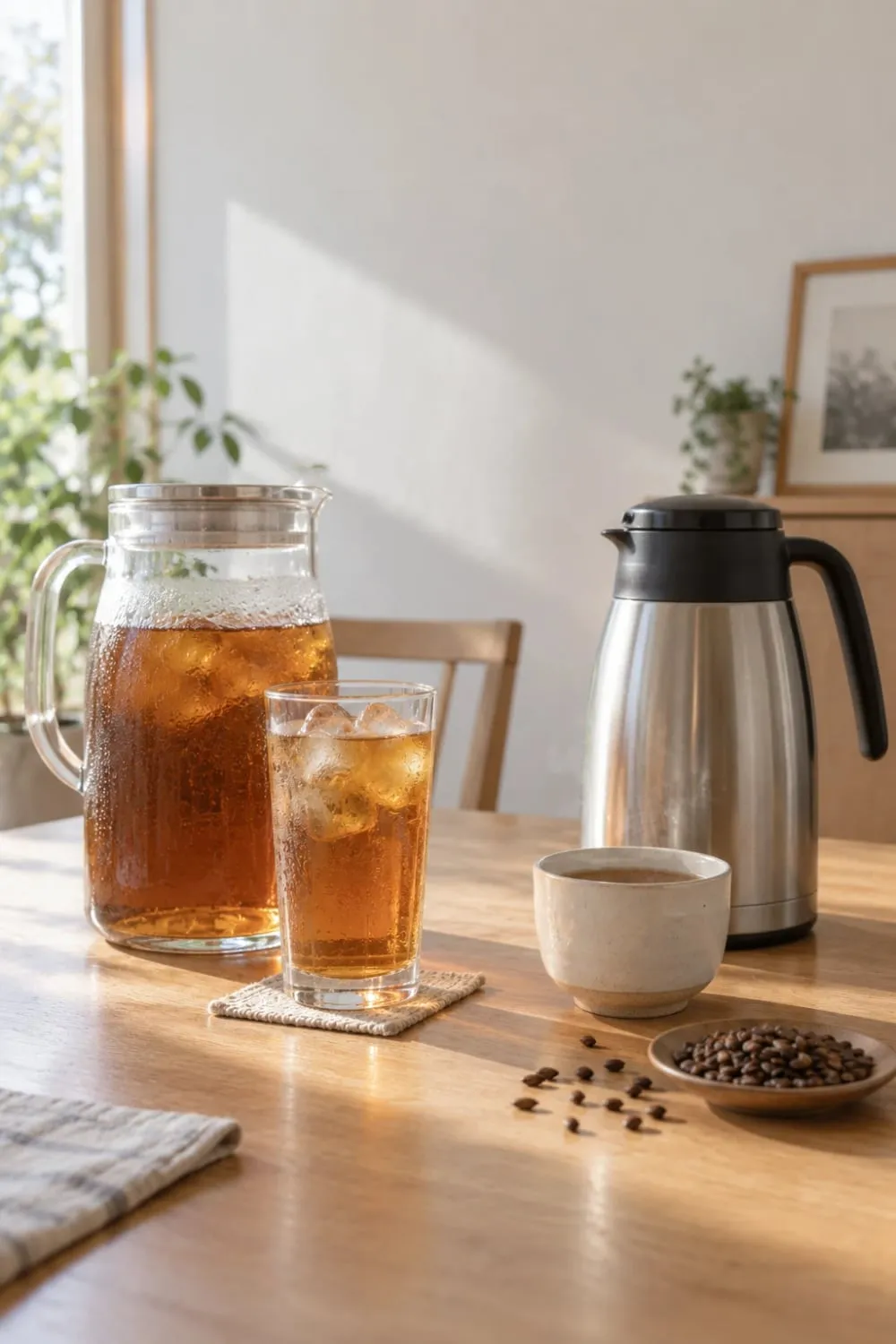
If you open a Japanese fridge in summer, there’s a good chance you’ll find a jug of pale brown tea in it. That’s mugicha — barley tea.
It isn’t tea in the botanical sense. It’s roasted barley steeped in water, which is why it has no caffeine at all, and why it can be drunk by anyone, at any hour, by the glass. I’ve written about where it fits among Japanese teas in Japanese Green Tea: What People Actually Drink at Home. This is the short, practical version: how I make it, when we drink it, and the winter habit that almost nobody outside Japan seems to know about.
How I make it
I use cold-brew tea bags. One bag goes into a jug of cold water, the jug goes into the fridge, and a couple of hours later it’s ready.
That’s genuinely all there is to it. No kettle, no cooling, no measuring. It’s one of the few things in the kitchen that doesn’t need a technique.
The one habit I do keep: I try to finish each jug within about two days. It’s a drink you make often rather than a drink you make ahead.
Keep it cold, and don’t keep it long
This is the part worth saying plainly, because barley tea isn’t like a pot of black tea left on the counter.
Brewed barley tea is a fresh, unpreserved drink. In Japan it’s treated as something that lives in the fridge and gets finished quickly, not as a jug that sits on the counter for days.
So: a clean jug, the fridge rather than the counter, and a couple of days at most. Instructions vary between brands — the box I buy gives a brewing time but doesn’t say when to take the bag out — so follow the ones on the package you buy. And for how long any perishable drink can safely sit at room temperature, the USDA’s guidance on the “danger zone” is the place to look rather than me.
Mugicha (Japanese Barley Tea)
Roasted barley, not tea leaves, so there is no caffeine in it at all. The cold brew bags are the version to get: one bag in a jug of cold water in the fridge, no kettle involved. This is what Japanese households drink through the summer.
View on Amazon Opens Amazon.com in a new tab. Paid link.When we drink it
Summer is its season. In my house it’s what goes with meals, what gets poured after a bath, and what people drink through the day to keep going in the heat.
It tastes roasted and faintly nutty — closer to something toasted than to green tea — with a slight bitterness that turns out to be exactly right when you’re hot. Because there’s no caffeine in it, there’s no point in the day when it’s the wrong drink.
The winter version
Here’s the part that surprises people.
Barley tea is thought of as a summer drink, and mostly it is. But it’s very good hot, and some people keep drinking it through the winter. I do.
In winter I put a tea bag and hot water into a thermos, and drink from it through the day. It stays warm for hours, it keeps brewing gently as it sits, and it’s a caffeine-free hot drink you can reach for at any time without thinking about it.
If you’ve only ever had barley tea iced, it’s worth trying hot at least once.
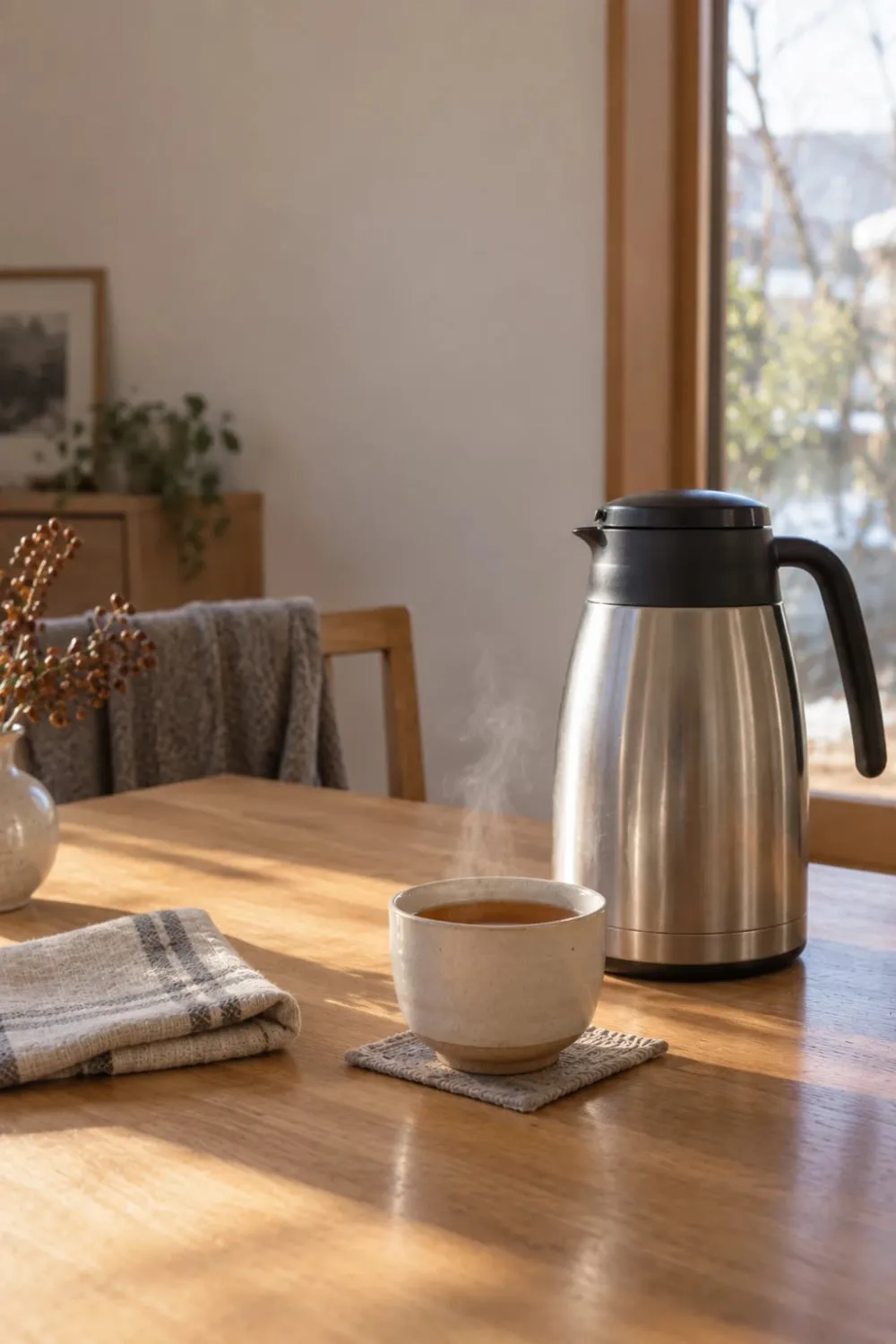
Insulated Thermal Carafe
What makes barley tea a winter drink: put a tea bag and hot water in, and it stays warm through the day. A wide opening is easier to clean, and a pour-through lid means you are not unscrewing it every time.
View on Amazon Opens Amazon.com in a new tab. Paid link.What to look for when you buy it
A few things are worth checking on the package or listing:
- Cold-brew or boiling. Some bags are made for cold water, some for simmering in a pot, and some say they work either way. If you want both summer and winter use out of one box, look for one that says it does both.
- Tea bags or loose barley. Bags are much easier for everyday use. Loose roasted barley is usually simmered in a pot and strained.
- The ingredients. It should be roasted barley. Some blends add other grains or tea; those aren’t wrong, but they taste different.
- A jug with a wide mouth. Any jug works, but you’ll be washing it often, and a wide opening makes that much easier.
That’s the whole thing. Make a jug, keep it in the fridge, finish it in a couple of days, and in winter, put the kettle on instead.