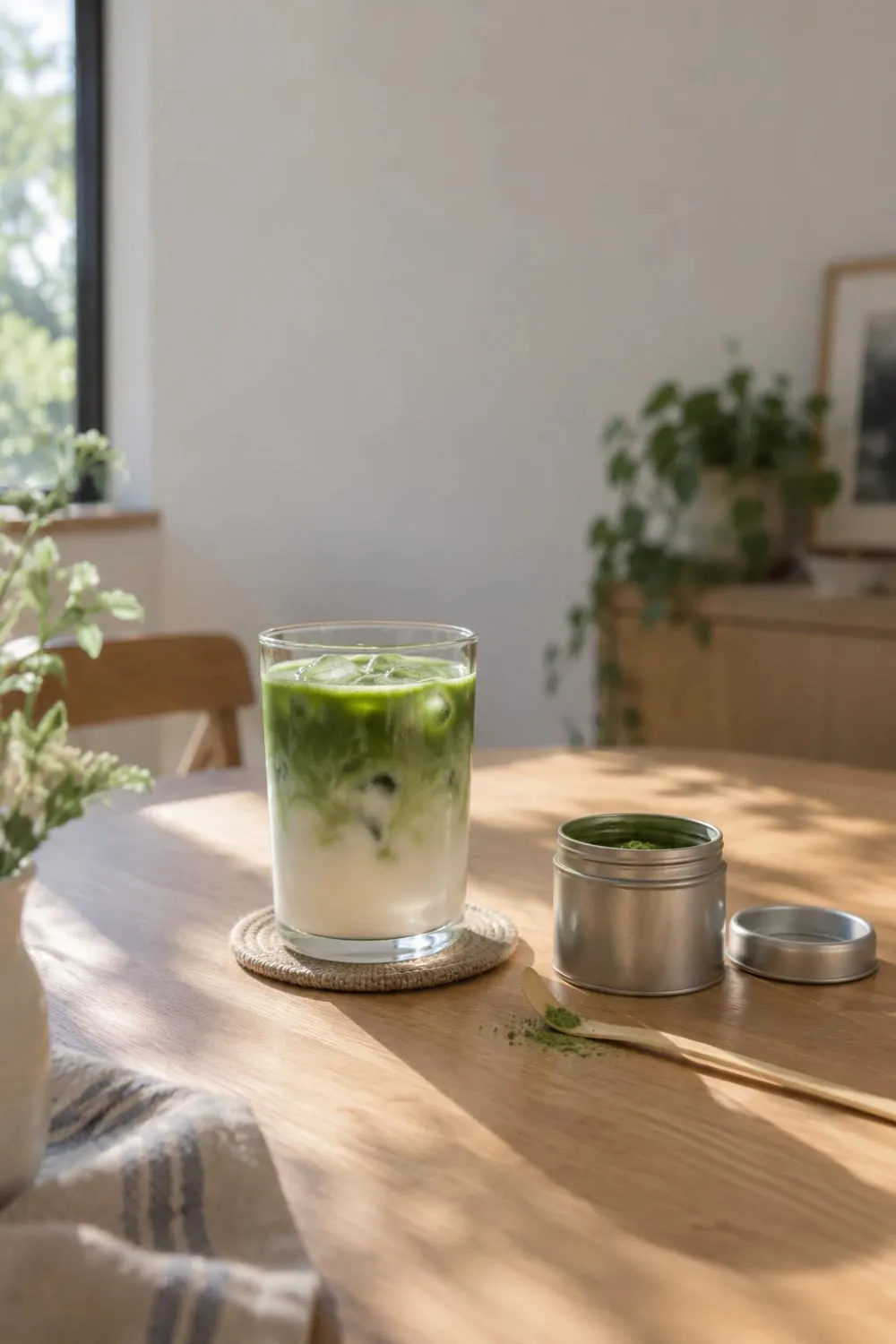
Search for “matcha for lattes” and the results are surprisingly hard to read.
You get small tins and large bags, pale green powders and bright green ones, products described as ceremonial, premium, culinary or latte grade. They can look almost identical on the page while being meant for quite different things.
I don’t think the useful question is which grade is best. If you’re making a latte, the better question is simpler: what is actually in the package, what is it meant for, and will you finish it while it still tastes good?
Here is what I look at when I buy matcha in Japan, and how it translates to a product page.
First, check that it is actually just matcha
Before the color, the origin or the grade, read the ingredients.
If the list says only matcha, or green tea, you are looking at plain tea powder. If it also lists sugar, milk powder, creamer or flavoring, you are looking at a matcha latte mix.
There’s nothing wrong with a mix. It’s a different product, designed to make one particular drink quickly, with the sweetness and the milk already decided for you. With plain matcha you control all three yourself.
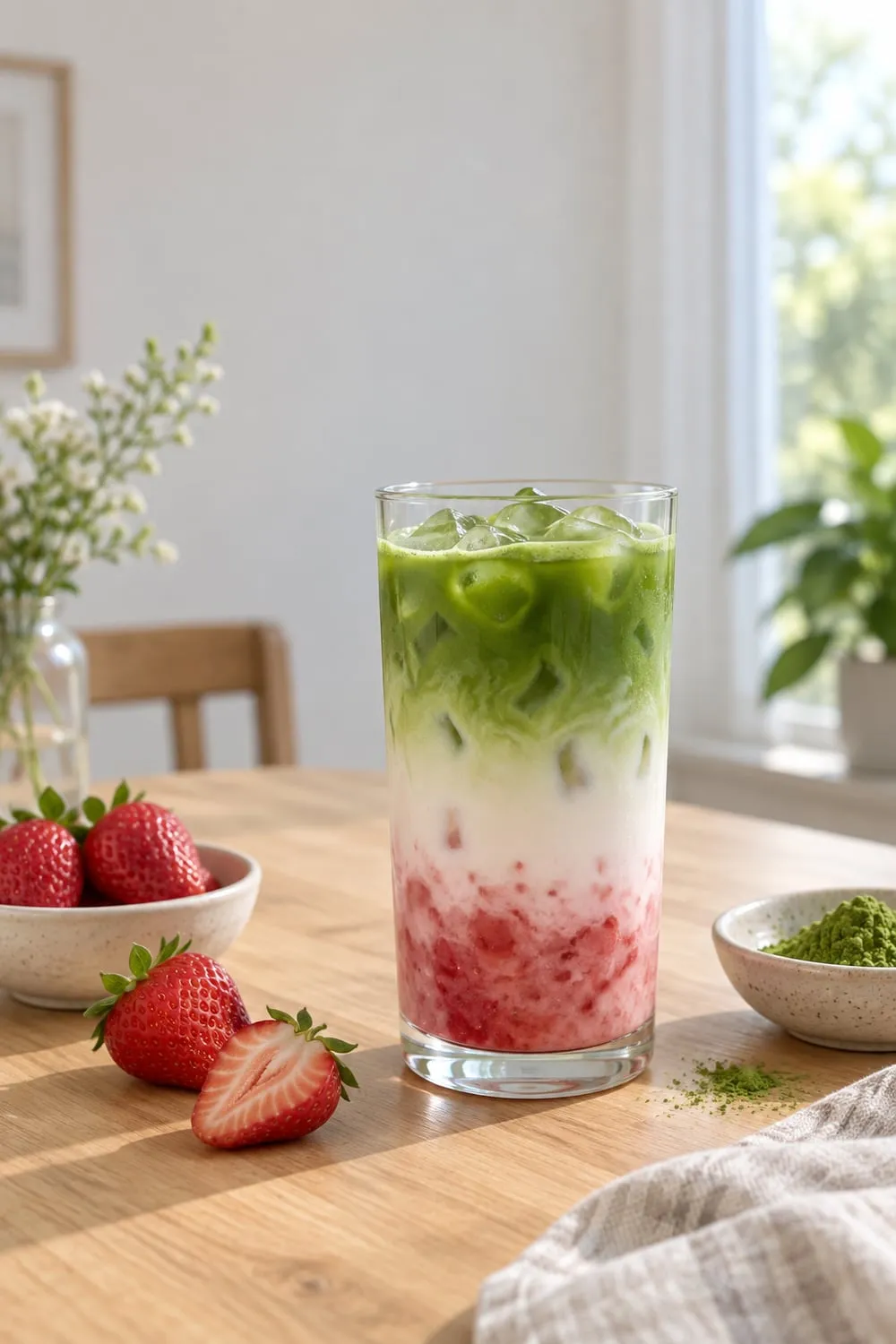
That matters most for drinks like strawberry matcha, where the fruit already brings the sweetness. Starting from plain matcha is what lets you balance it.
So when a package says “matcha latte” in large letters, look for the small print. The ingredients line tells you more than the front of the package does.
Matcha and powdered green tea are not the same thing
The other label worth watching for is “green tea powder.”
Matcha is made from tea grown under shade for the weeks before harvest. The leaves are steamed and dried without being rolled — that intermediate tea is called tencha — and then ground very fine, traditionally in a stone mill.
Powdered green tea, funmatsu ryokucha, is usually ordinary leaf tea such as sencha ground into powder. It’s cheaper, it’s made from a different raw material, and it tastes different. The two aren’t interchangeable just because both are green and powdered.
In English, “green tea powder” can end up describing either. If you want matcha specifically, look for the word matcha on the listing, and a stated origin, rather than going by the color of the powder or the look of the tin.
I’ve never bought powdered green tea to use at home, but I’ve drunk it in restaurants here, and it is a different drink altogether. The color, the foam, the body and the bitterness are all different. Matcha is sweet and rich; powdered green tea is a little astringent and clean-tasting. I haven’t bought a sweetened latte mix either, so I treat that one simply as something to recognize on a label. Either may be exactly what someone wants for convenience; neither is what I mean by buying matcha for a latte.
What I look at on the package
When I buy matcha here, I look at four things: where it was grown, what it’s meant for, how much is in it, and the price. None of them tells you everything on its own.
Where it was grown
Uji in Kyoto, Nishio in Aichi, and Kagoshima are names you’ll often see on matcha packaging. They’re useful information, but not a guarantee. “Uji” on a product page doesn’t tell you whether that particular tin will work in your latte, any more than a bright green photograph does.
What I want is a clear statement of where the tea comes from. It doesn’t prove anything about quality, but it’s something you can check — which a listing that just says “premium Japanese matcha” isn’t.
What it’s meant for
Japanese packaging often says whether a matcha is for drinking or for sweets and cooking. The difference between those grades is covered in How to Make Matcha Without It Tasting Bitter, so I won’t repeat it here.
For a latte, matcha sold for cooking or for lattes is the sensible default. Milk and sweetener change the drink so much that you don’t need the matcha you’d choose for whisking with water and drinking on its own.
Matcha for Lattes and Baking
Matcha sold for culinary use is generally meant to stay noticeable alongside milk, sugar and other ingredients. The label is a useful shopping category rather than a standardized Japanese grade, so quality still varies between producers. The sensible default for baking and sweetened drinks, though using drinking matcha there is a choice some people make deliberately.
View on Amazon Opens Amazon.com in a new tab. Paid link.How much is in it
This is easy to overlook online. The small tins and bags I see in Japan are usually around 30–40 g (1–1.4 oz). Matcha for baking and sweets is also sold in much larger bags.
Bigger isn’t automatically better, which is the next point.
The price
I look at the price, but not on its own. A large bag often looks better per gram. That doesn’t help much if half of it sits open long enough to lose the flavor you paid for.
Buy the size you will finish
Once I open matcha, it tastes noticeably flatter after about a month. So I think about the size of the package before I think about the price per gram.
Latte recipes commonly use roughly 1–2 teaspoons of matcha, but there’s no single right amount — follow the recipe you’re using. Then think about how many lattes you actually make in a week, and pick a size you’ll get through in about a month.
Someone who makes one every morning and someone who makes one on the weekend need very different packages. The large bags sold for baking make sense for baking, where one batch of cookies can use more matcha than a week of drinks.
How you store it once it’s open matters too. That’s covered in How to Set Up a Matcha Station at Home.
Whatever you buy, sift it
Matcha compacts in the tin. However fine the powder is, it sits and presses together — the tin I open here is no different — and once liquid reaches a clump it is hard to break up.
Sifting is simply part of making it here: a small fine-mesh sieve over the bowl, the powder pushed through with the back of a spoon, before any liquid touches it. It takes about ten seconds. In a cold drink it is worth more attention than in a hot one, because dark specks in pale milk are very easy to see. Whatever is on the label, this step is where a lot of the difference actually is.
Fine-Mesh Matcha Sifter
The ten-second step that prevents clumps, and the one most people skip. A small fine-mesh strainer works; a sifter made for matcha sits over the bowl and leaves both hands free. Either way, the mesh needs to be fine enough that the powder falls through as dust rather than grains.
View on Amazon Opens Amazon.com in a new tab. Paid link.If you also want to drink it plain
This is the one case where I’d buy two small packages rather than one.
Matcha that works perfectly well under milk and sugar can taste harsh whisked with nothing but water. If you also want to make usucha — thin tea, whisked to a foam — a small tin meant for drinking will serve you better than one compromise tin trying to do both.
You don’t need two kinds just to make lattes. This only makes sense if you’ll genuinely drink it both ways.
Matcha for Drinking (Japanese Grown)
If your matcha tastes harsh, the powder is usually why. Japanese origin and a clearly stated growing region are useful signs that a seller knows what it is selling — Uji, Nishio and Kagoshima are names that come up — though a famous region on the label is not by itself a guarantee of quality. A sealed tin, and a small one rather than a bargain size.
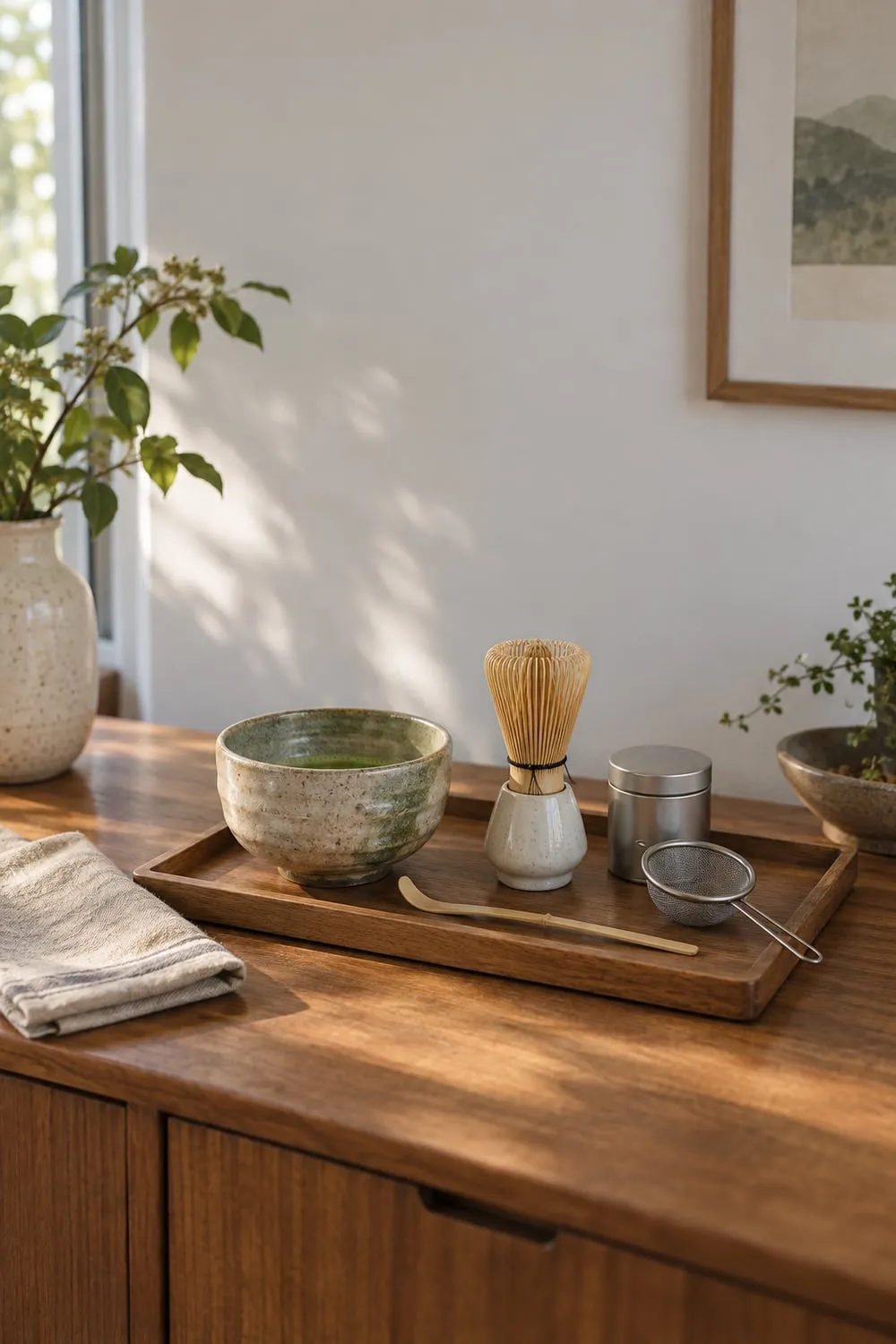
View on Amazon Opens Amazon.com in a new tab. Paid link.Drinking it plain also means a bowl and a bamboo whisk. That is how thin tea is made here, and the wide, shallow bowl is part of the reason — it gives the whisk room to move. The method is in How to Make Matcha Without It Tasting Bitter.
Matcha Bowl & Whisk Set (Chawan + Chasen)
A wide, shallow bowl gives the bamboo whisk room to move, which is what produces an even foam. Look for a set that includes the whisk holder, which keeps the prongs in shape, and a sifter — the step most people skip.
View on Amazon Opens Amazon.com in a new tab. Paid link.A quick checklist before you buy
- Ingredients: only matcha or green tea — no sugar, milk powder or creamer, unless a mix is what you want.
- The word matcha: not just “green tea powder,” which may be a different product.
- Origin: a stated growing region, not only packaging language.
- Intended use: for lattes, matcha sold for cooking or latte use is a practical place to start.
- Size: one you’ll finish in about a month after opening.
- Packaging: a sealed tin or a resealable bag, since you’ll be opening it again and again.
None of this requires the most expensive tin on the page. Mostly it requires ignoring the large words on the front long enough to read the small ones.
If strawberry matcha is what you’re making, the full method is in Strawberry Matcha at Home.